Fat busting tips after Eater

The Top 5 weight loss tips for now:

After the fun and celebrations of easter, it may be time to put down the chocolate and start back with the healthy eating, so here’s some tips to get you started:


  • Lower the sugar & carbs in your diet. There is now a huge debate going on in the science world that sugar & carbs, not fat, causes weight gain most significantly.
  • Eat more vegetables. Aim to eat between 6-8 different types of vegetables a day to gain the most nutrients, feel full on little calories & boost your health.
  • Use natural fat busting foods such as coconut oil, milk & cream, chia seeds, cayenne pepper, turmeric, purple carrots, cinnamon & apple cider vinegar.
  • Cut the alcohol. Alcohol is pure calories with no form of nutrients within. So this time of year, watch how much you celebrate.
  • Drink around 2L of water a day to stay hydrated, feel fuller & keep the skin looking younger and firmer.

Midges make Chocolate???

Now I’m no expert on chocolate, although I can’t deny that at the end of the week, I do love a good square or two of the dark kind, for all it’s enduring health qualities of course, and high antioxidant capacity, disease fighting ability and last but not least how delicious it is!

But did you know that the cocoa plant, where chocolate comes from, is completely reliant on several small and very annoying biting insect, that I am not at all a fan of, and that we have a large quota of right here in Queensland?

I’m talking about midges, yes, those almost invisible tiny insects that some people say pee on you, and others say bite you, only to often cause large and ridiculously itchy welts!

Well those guys help chocolate production by pollinating the cocoa’s flowers and turning them into fruit. Without this process, there would be no chocolate, which would be very sad.

So maybe I’ll try not to think bad thing’s about midges anymore while I’m enjoying my dark chocolate on Friday nights.


Find Honor on Facebook, Twitter and her blog www.nutritionsciencewellness.com.au


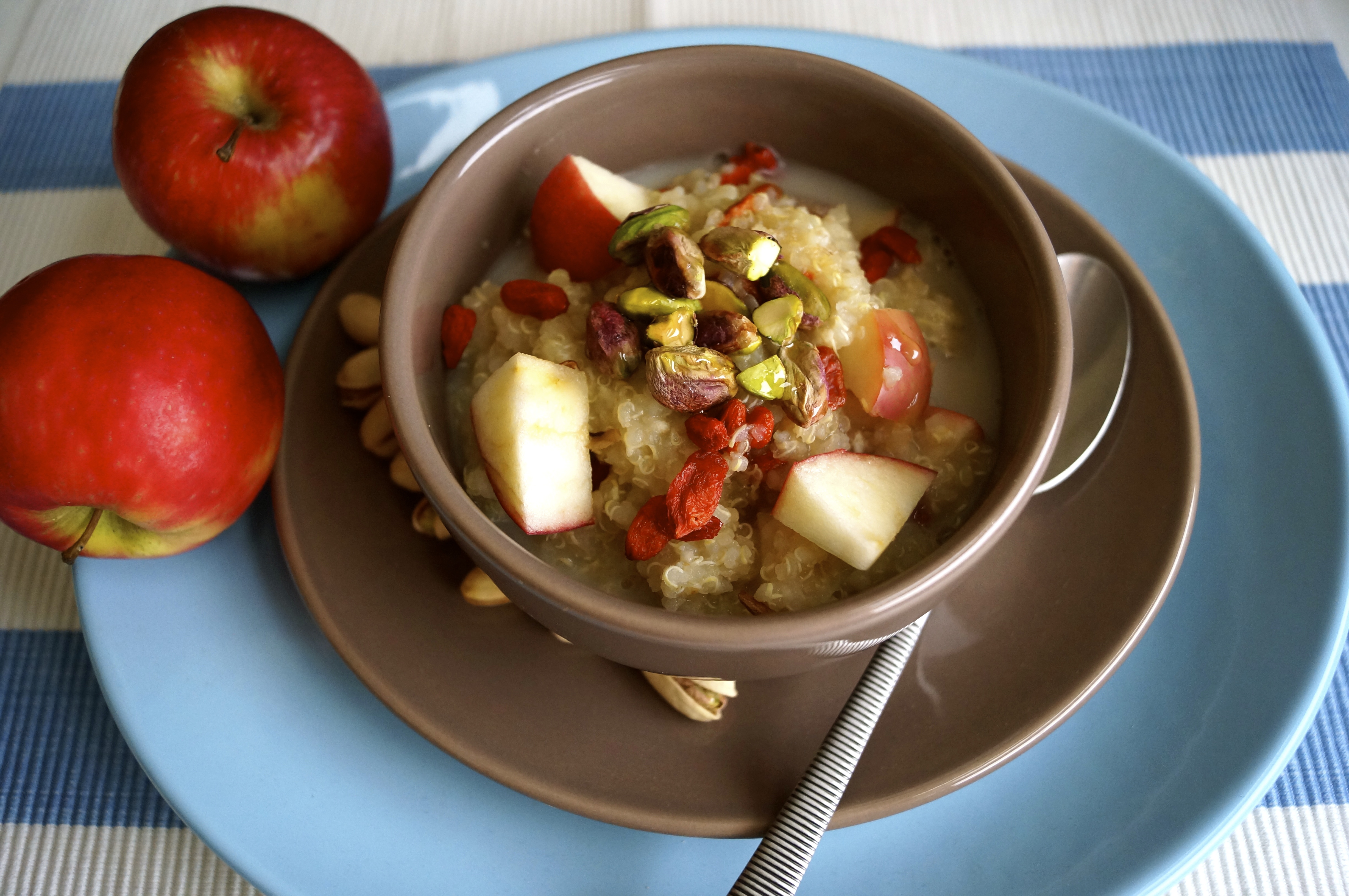
Yummy Apple Cinnamon Quinoa Porridge

DSC07183

-1/2 cup soaked and rinsed quinoa grain

-2 cups of water for cooking quinoa

-1/4 tsp. cinnamon

-1/8 cup sultanas

-1/4 cup chopped apple

-1/4 cup chopped raw almonds

-1/2 cup milk of choice

-1 tsp. raw honey, if needed


Serves 3-4


Cook the quinoa, once cooked, add cinnamon and milk and stir until porridge like.

Add honey stir through. Add chopped apple and almonds once served, and enjoy!!!


The Bacteria in our mouth predicts whether we get cavities or plaque

It’s Sunday, and I probably am meant to be resting, but I don’t know how to and this topic has been on my mind since interviewing Dentist Stevin Lin.

We spoke on many fascinating topics in regards to nutrition, oral health and general health, but we also spoke on how the predominant species of bacterial communities we hold in our mouths can effect whether we are the kind of people who are more prone to cavities, or plaques.

And the types of cavity forming bacteria can apparently be easily transferred from one person to another through sharing food or drink. Meaning, you can potentially catch cavities through trying someones tasty strawberry smoothie!!!

But what is stuck in my brain is- why can’t it go the other way too? Can people who have great oral bacteria and are free of cavities, spread their good bacteria to others, helping them fight cavities too?


Is Sugar Really So Bad??

The latest fashion in health is to go sugar free.

People all over the world are doing it, and it is undoubtedly extremely good for you to do so! From weight issues to dental health to even mood and skin, it can help.

But the problem is; innocent sounding fruit sugar or fructose, is far more damaging than the glucose found in sugar!

Fructose and high fructose corn syrup started replacing sugar in most processed foods around 1980, when it was discovered to be sweeter and easier to mix.

As well as being now hidden in soft drinks, confectionary and sauces, fructose is also found in dried fruit, fruit, juices, maple syrup, fruit concentrate, honey and sweet wines.

Many of those new ‘healthy’ treats and snacks labeled ‘sugar free,’ may contain higher amounts of fructose.

Fructose and High Fructose Corn Syrup have a few downsides: they cause more weight gain than glucose from sugar because fructose isn’t regulated in the body the same way as glucose, and on top of that fructose is invisible to our appetite regulating system that normally prevents us from over-eating calories.

With fructose being invisible to this system, we can basically eat calorie-laden fructose all day long without feeling full!

If that wasn’t bad enough, when fructose is broken down in the body it causes lots of damage to cells and excess lactate, which leads to more pain, inflammation and accelerated cell aging, all being viewed as contributing to most chronic illnesses.

So if you decide to give up sugar, also be aware of the potentially far more damaging: fructose.


Find Honor on Facebook, Twitter and watch out for her new book: A Diet in Paradise.

How Do I Give up Meat, but Keep My Protein High?

With so many people eating an excess in animal meat which is now being highly linked to premature ageing and earlier death (due to activation of mTOR- for all you other nerds out there- but keep an eye out for my soon to be released book “A Diet in Paradise” which explains this whole health event), how do you take a break from meat without jeopardising your protein levels? You make sure you’re having a ‘complete protein’ 3 times a day. A complete protein is found not only in meats, chicken and fish, but in eggs, dairy and pure vegetarian types such as combining: a legume with a grain in a meal, or mixing a legume with nuts/seeds in a meal. This allows you to keep your weight loss/muscle building goals, whilst giving your body a break from all the animal flesh =)

Could Antioxidants be Bad?

After all these years of hearing the wonderful benefits of antioxidants from anti-aging boosters to cancer fighting warriors, could we have gotten it wrong? What if too much of a good thing is actually bad?

New research is questioning just that: if we are over doing it with antioxidants, and whether they are blocking the natural defenses of free radicals.

Yep, you heard it- could free radicles actually be good for us?


What’s a free radical?

When we eat food it is broken down and energy (ATP) is manufactured within the mitochondria of a cell. But in the conversion of food to energy, oxygen is required, and this is referred to as an‘ oxidation process’ where free radicals are produced.


There are 3 main categories of antioxidants- enzymic antioxidants, which are those our own body produces. Vitamin derived antioxidants, which are those found in Vitamin C, E, and A, and Phytochemical type antioxidants that are produced by plants in order to protect themselves from damage or harm from UV sunrays, insects, fungi or bacteria, such as the tannins in tea and resveratrol in red grape skins.


But according to Nobel Prize winning geneticist James Watson, it is these same antioxidants that could be causing some cancers, and shortening the life span of cancer sufferers. In cancer, it is free radicals or oxidation that is in fact, desired and which are responsible for most cancer cells being destroyed.


Additionally, in the well-respected science Journal of Physiology, it was found in aged men who took the antioxidant, resveratrol, it physically blocked the positive health impacts that exercise had on their heart, blood pressure, cholesterol and oxygen uptake.


So, what’s the conclusion? Are antioxidants good or bad? Are free radicals in fact the newest discovery in the natural arsenal for fighting cancer?

The evidence is still pointing towards the benefits of eating a diet rich in antioxidant foods found naturally in fruits, vegetables, grains, herbs and spices. The supplement versions of antioxidants are where negative issues are potentially arising.

To ask Honor any questions or book an appointment visit her Facebook page at Honor Tremain Thriving Nutrition


GMO Expert Jeffrey M Smith Weighs in on my Soy story

After a few readers wrote in about my previous soy story, I asked US based GMO expert, film maker, author & politician Jeffrey M Smith to help answer some questions for us.

Q) If a soy product is labeled ‘organic’, can it also be GMO or GE?

A) “Organic is not allowed to intentionally be GMO.

There are also non-organic non-GMOs, usually labeled as such”.

Q) What percentage of soy seed has been GMO, and can it be labeled organic if the seed is GMO?

A) “Organic is not GMO. 93% of soy grown is GMO. 7% is not”.

For more on Jeffrey and his amazing work visit http://www.responsibletechnology.org/resources/media-kit/jeffrey-m-smith-bio


The Truth About Soy

It’s rare these days for anything pertaining to health and diet to be simple, and here is yet another complicated topic: soy. Is it good for us or is it disastrous for our health? Some of the most intelligent health professionals in Australia still advocate soy as being hugely beneficial to us, yet on the Internet soy is attributed to multiple health disasters, usually involving dangerous estrogen levels. Recently, one of the most popular and respected soy milk manufacturers, Spiral foods, who prepares their soy milk in a traditional Japanese method and use the addition of the seaweed kombu to increase the minerals in the milk and allow for better absorption, have been sued in a class action suit for the amount of $25 million Australian dollars. This happened after around 500 people joined together, raising concerns about the health implications of the seaweed, not the soy. So if we look purely at soy, what is the truth about its health implacations? The upside of soy is: Organic soy is completely different to non-organic soy, and is good for you in small amounts. Yes, soy contains estrogenic compounds (compounds which mimic estrogen) that are great for health in small doses. Soy is super high in fibre and some potent antioxidants. Soy is high in protein, and a great alternative to the over consumption of meat and fish we ingest- that are pumped full of chemicals, hormones, inflammatory molecules and toxins. The down side: Non- organic soy is heavily sprayed with pesticides and has been genetically modified, so I would suggest avoiding it altogether. We ingest too many estrogenic compounds, but they usually come from foods or drinks which are contained in plastic, such as from bottles, food containers, cling wrap, etc.. If you eat too much soy, as with anything, it may be bad for you. Non-organic soy is used as a filler in many processed foods- such as baby formula, biscuits, protein powders, which I would suggest avoiding due to the pesticide residue remaining on the soy, in addition to the GMO nature of the soy.   For more truths on foods, grab Honor’s new soon to be released book: ‘A Diet in Paradise’ or find her on Facebook and Twitter.

Thankful Thursdays

We live such fast paced lives, always looking at what we don’t have, but I am so often surrounded by truly inspiring and caring people. Just today my last client made me lunch in the form of a salad jar, using all the foods I had recommended she eat! Beautiful! So I have decided to start ‘Thankful Thursdays’, a chance to be grateful for this day because life is such a blessing, and even richer when we appreciate how lucky we are!

I am grateful for my beautiful family, friends, my clients, my awesome business mentor- Yale Morgan, and for living in paradise.

What about you?IMG_6680